
Victoria Cross awarded to Sergeant Harry Wells
See a Victoria Cross in Faversham
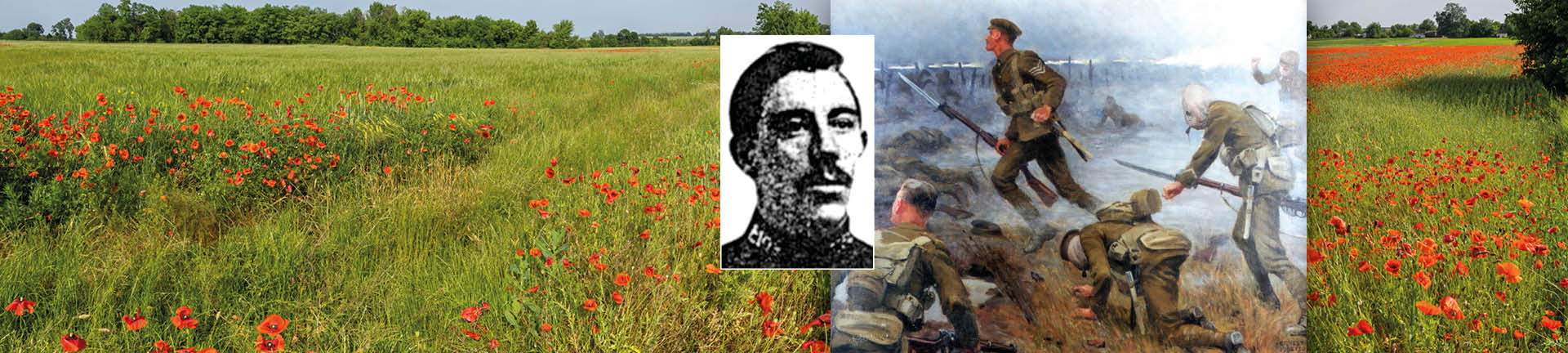
You can now see the Victoria Cross awarded to Sergeant Harry Wells, a former Kent Police officer who received this highest award for bravery. Harry served as a Police Constable in Ashford before the First World War, and he was posthumously honoured for his actions at the Battle of Loos in 1915. His medal was later presented to his mother by King George V.
The Armed Forces Network has been working with the Royal Sussex Regiment Association and Kent Police Museum to honour Harry’s courage and the service of all armed forces personnel. Together, they are bringing his Victoria Cross to Kent Police Museum for visitors to see during the 2026 museum season.
About Harry Wells
Harry Wells was born in Herne Bay on 19 September 1888. After leaving school at 12, he worked as a farm hand and later in a mill, where he lost two fingers on his right hand. A few years later, for reasons unknown, he chose to join the British Army.
He enlisted in the 2nd Battalion, The Royal Sussex Regiment in 1904 at just 16 years old. Much of his service took place in India, where he worked as a battalion signaller and earned two Good Conduct awards before leaving regular service in 1911.
Joining Kent Police
One month after leaving the Army, Harry joined Kent County Constabulary and trained at Wrens Cross. As Police Constable 105 H. Wells, he served in ‘E’ Division, Ashford, before moving to Farningham.
A 1915 Kentish Express article described him: “He was of a quiet and retiring disposition and a very efficient officer, respected by all who knew him”. It is not known why he left the constabulary in December 1913. He worked briefly as a bar tender before being called back to the Army at the start of the First World War.
Service in the First World War
Harry returned to his original battalion and arrived in France with the British Expeditionary Force on 12 August 1914 as a Lance Corporal. The battalion later saw action at the battles of Aisne and Ypres. He was wounded three times and was recommended for the Distinguished Conduct Medal for laying telephone wires under fire.
Thanks to his experience and leadership, he was promoted quickly to Sergeant.
The Battle of Loos and Harry’s bravery
On 25 September 1915, the first day of the Battle of Loos and just six days after his 27th birthday, Harry showed remarkable bravery during an attack north of Loos.
With his officer killed and half his platoon dead or wounded, Harry rallied his men and led them to within 15 yards of their objective. Despite heavy casualties, he stood again to encourage his remaining men forward. He was killed in this act of leadership and courage.
Read Sergeant Harry Wells' citation.
This rare medal is on loan to us and is now on display as one of our headline exhibits for the 2026 season.
Plan your visit to discover this remarkable story and explore the wider history of policing in Kent.
&w=1024&h=1129&scale=both&mode=max)